
Newsroom
HKU-led PISA 2025 Study Highlights Hong Kong Students’ Strength in Computational Problem-Solving and Next Steps for Future Readiness
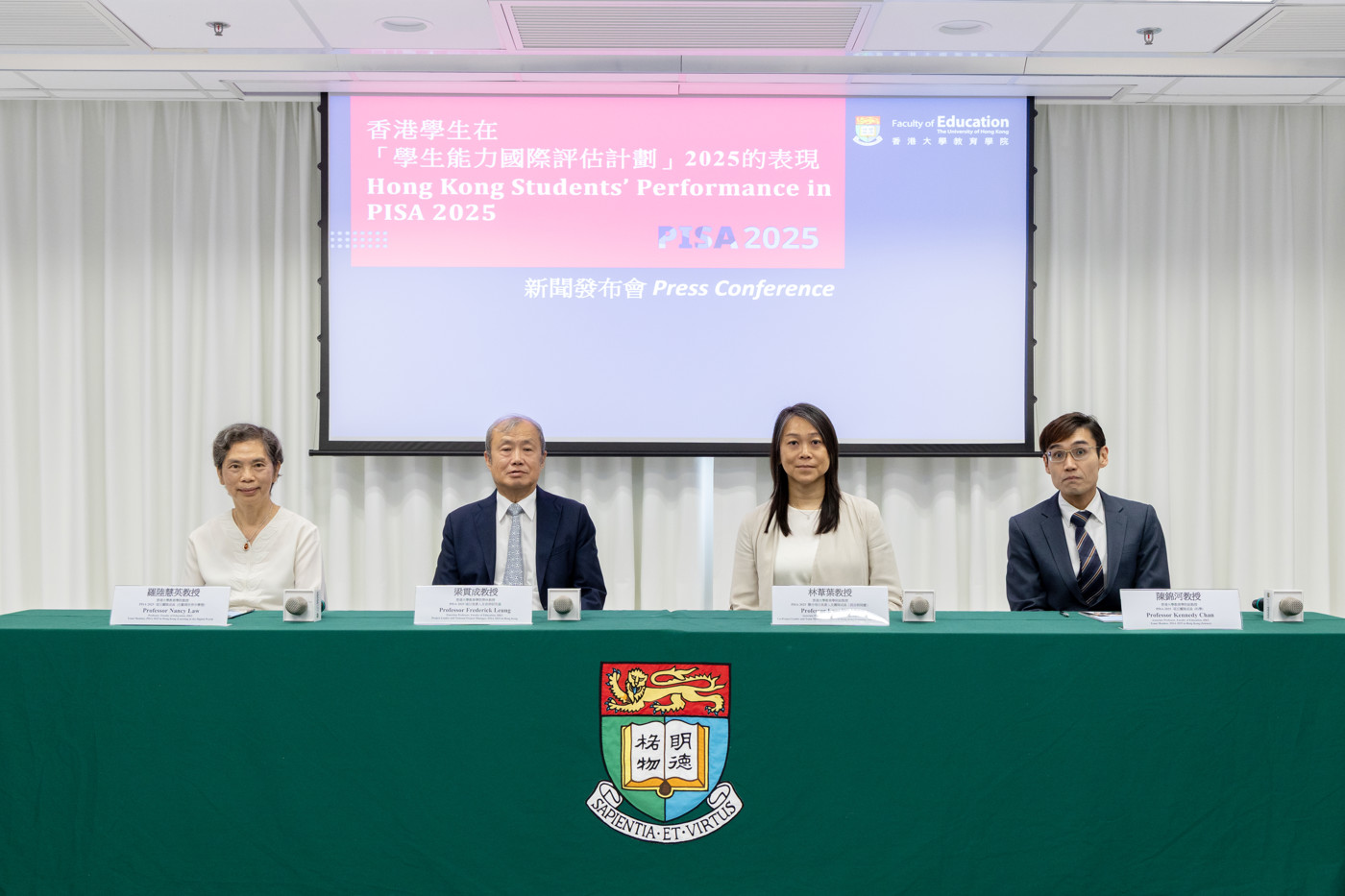
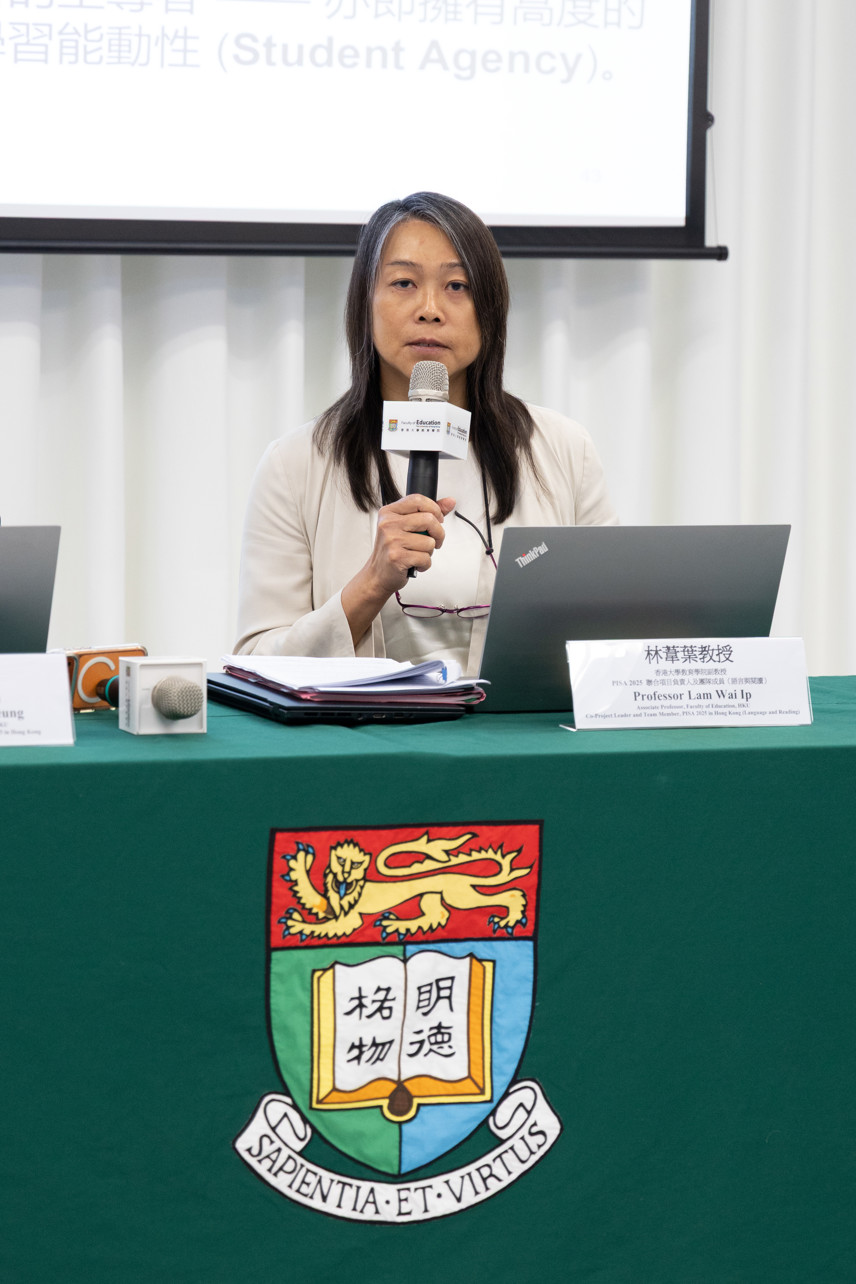
1. The Faculty of Education of The University of Hong Kong (HKU) announces the Hong Kong results of the Programme for International Student Assessment (PISA) [1] commissioned by Education Bureau of the Government of the Special Administrative Region and conducted in 2025. The PISA Project Team, led by Professor Frederick K.S. Leung and Professor Wai-ip Lam, informs the public about the findings of the Hong Kong component of PISA 2025 at the press conference concurrently with the official international press release in Paris, France, today on September 8, 2026. The results highlight Hong Kong students’ strengths and provide an international reference point for improving students’ future readiness:
Hong Kong students continued to perform above international averages in science, mathematics and reading, and performed particularly strong in Learning in the Digital World, the innovative domain assessing computational problem-solving skills.
Scores in science, mathematics and reading were however lower than those in PISA 2022, suggesting the need to give students more opportunities to apply abstract ideas and subject knowledge, evaluate information from multiple sources, and solve unfamiliar and complex problems.
The findings highlight the need to strengthen students’ future readiness by fostering student agency, particularly their drive to learn, self-regulated learning capacity, and evidence-based reasoning.
PISA’s Focus on Future Readiness and Student Agency
2. PISA, coordinated by the Organisation for Economic Co-operation and Development (OECD) [2], differs from curriculum-based assessments. It focuses on how well 15-year-old students apply knowledge and skills to unfamiliar and real-world situations, reflecting their readiness to navigate, adapt to and thrive in a rapidly changing, complex and uncertain world. Its results should therefore be interpreted as one source of evidence for improvement for future readiness, rather than as a complete measure of education quality.
3. In the OECD framework, future readiness refers to young people’s capacity to thrive in, adapt to and help shape an increasingly complex world. Central to this is student agency: the ability to set goals, make informed choices, act, reflect and take responsibility. PISA 2025 reflects these priorities through assessments in science, mathematics, reading and digital learning, as well as surveys on students’ attitudes, learning strategies and school environments.
Excellent Performance in Learning in the Digital World (Computational Problem-Solving Skills)
4. PISA features an innovative domain in each cycle to gauge whether students have acquired the knowledge and skills needed for future life. For PISA 2025, the innovative domain is “Learning in the Digital World”, which assesses computational problem-solving skills.
5. Hong Kong students performed strongly in this innovative domain. They scored 545 in this innovative domain, significantly higher than the international benchmark average of 500, placing it among the top-performing countries/economies worldwide.
6. In this domain, 42.9% of participating students reached the highest proficiency levels, Levels 5 and 6 [3], and a further 21.6% reached Level 4. The percentage of students at Level 5 and above is significantly higher than the percentage on average across OECD countries. This shows that many Hong Kong students can engage in moderate to sophisticated programming and modelling, apply computational logic and solve problems in digital environments.
7. This result may reflect the cumulative contribution of science, mathematics, STEAM education and digital literacy education in Hong Kong. The skills involved in computational problem-solving are closely related to science, mathematics and reading, especially when students are required to define problems, interpret data, test solutions and explain conclusions. Hong Kong students’ strong performance in this domain suggests that they have potential that can be further applied across domains, and that they are well-positioned to benefit from recent digital education initiatives and engage with emerging technologies.
Core Domains Above International Averages, with Opportunities to Strengthen Advanced Competencies
8. Across the three core PISA domains, Hong Kong students continued to perform above international averages. Most students attained Levels 2 to 4, showing that they have reached at least the baseline level of proficiency needed for further learning and everyday problem-solving.
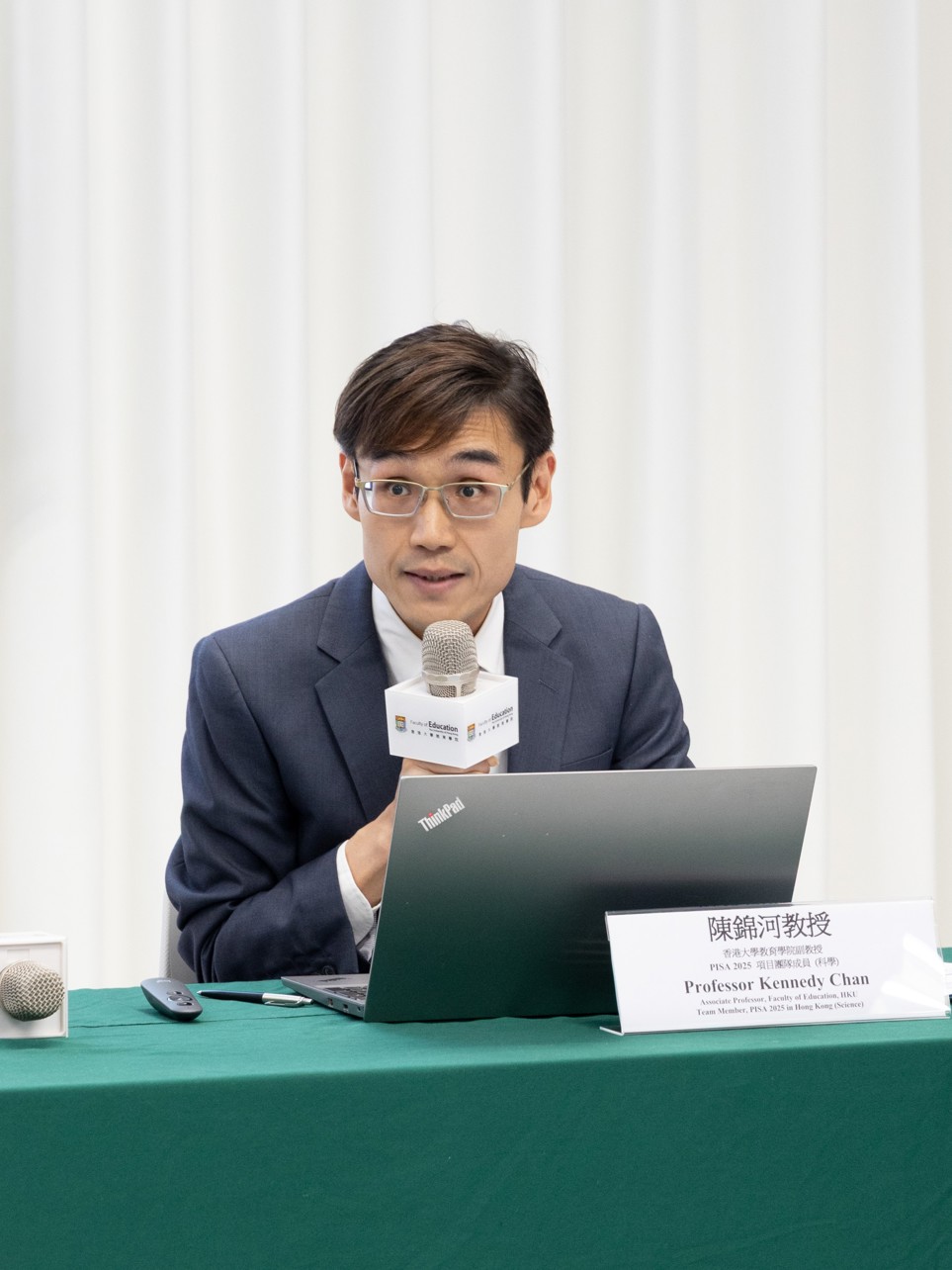
Science - Hong Kong scored 496, significantly higher than the international average of 482. Around 79% of students attained at least a baseline level of proficiency.
Mathematics - Hong Kong scored 522, significantly above the international average of 463, remaining among the higher-performing countries/economies. Around 83% of students reached at least a baseline level of proficiency.
Reading - Hong Kong scored 480, above the international average of 461. Students chose Chinese or English as their assessment language, and around 78% attained at least a baseline level of proficiency.
9. Scores in science, mathematics and reading were 18 to 24 points lower than those in PISA 2022. While most students continued to show solid foundations, their abilities to solve complex and unfamiliar problems, evaluate information critically, reason with abstract ideas and justify conclusions independently could further be strengthened.
Understanding Score Changes in a Broader Context
10. In its analysis of international score declines in reading, the OECD cautions that changes should not be attributed to a single cause. These observations may also be relevant to Hong Kong. The current student cohort experienced disruption and adjustment during and after the COVID-19 pandemic, while also growing up in a highly digital environment with rapid and fragmented online content. These wider contexts may have affected students’ learning routines, attendance, engagement, sustained attention, information processing and perceived value of schooling, which in turn may have influenced how they applied knowledge and performed in the assessment.
11. Changes in what PISA assesses should also be considered when interpreting score trends. Recent PISA frameworks place greater emphasis on future readiness for complex real-world challenges. For example, PISA 2018 Reading added ‘evaluating’ to reflect digital and multiple-source reading; PISA 2022 Mathematics made ‘mathematical reasoning’ more explicit and central; and PISA 2025 Science introduced new competencies on researching, evaluating and using scientific information for decision making and action.
12. These changes point to the next stage of learning development. Hong Kong students have a strong foundation but need more regular opportunities to develop advanced skills needed for future learning and work.
Next Steps: Fostering Student Agency
13. To develop the advanced competencies, students require stronger student agency. HKU’s analysis identifies three related capacities of student agency that can support this development:
Drive to learn describes how students approach learning with goals, curiosity, perseverance and enjoyment in solving problems. Hong Kong students reported strong enjoyment of problem-solving compared with their international peers. However, their broader curiosity and perseverance remain slightly below the international average, and their perceived value of schooling has declined moderately. This suggests the need to help students better connect school learning with future study, work and adult life.
Self-regulated learning capacity concerns students’ ability to monitor progress, seek help, and adjust strategies when learning becomes difficult. Hong Kong students reported relatively strong help-seeking, especially from teachers. This is a positive sign of active learning. At the same time, their cognitive adaptability, the ability to adjust thinking and strategies in new, difficult or changing situations, was below the international average. Together with a lower reported growth mindset, this suggests the need to strengthen students’ confidence in adapting to new situations and seeing ability as something that can grow through sustained effort.
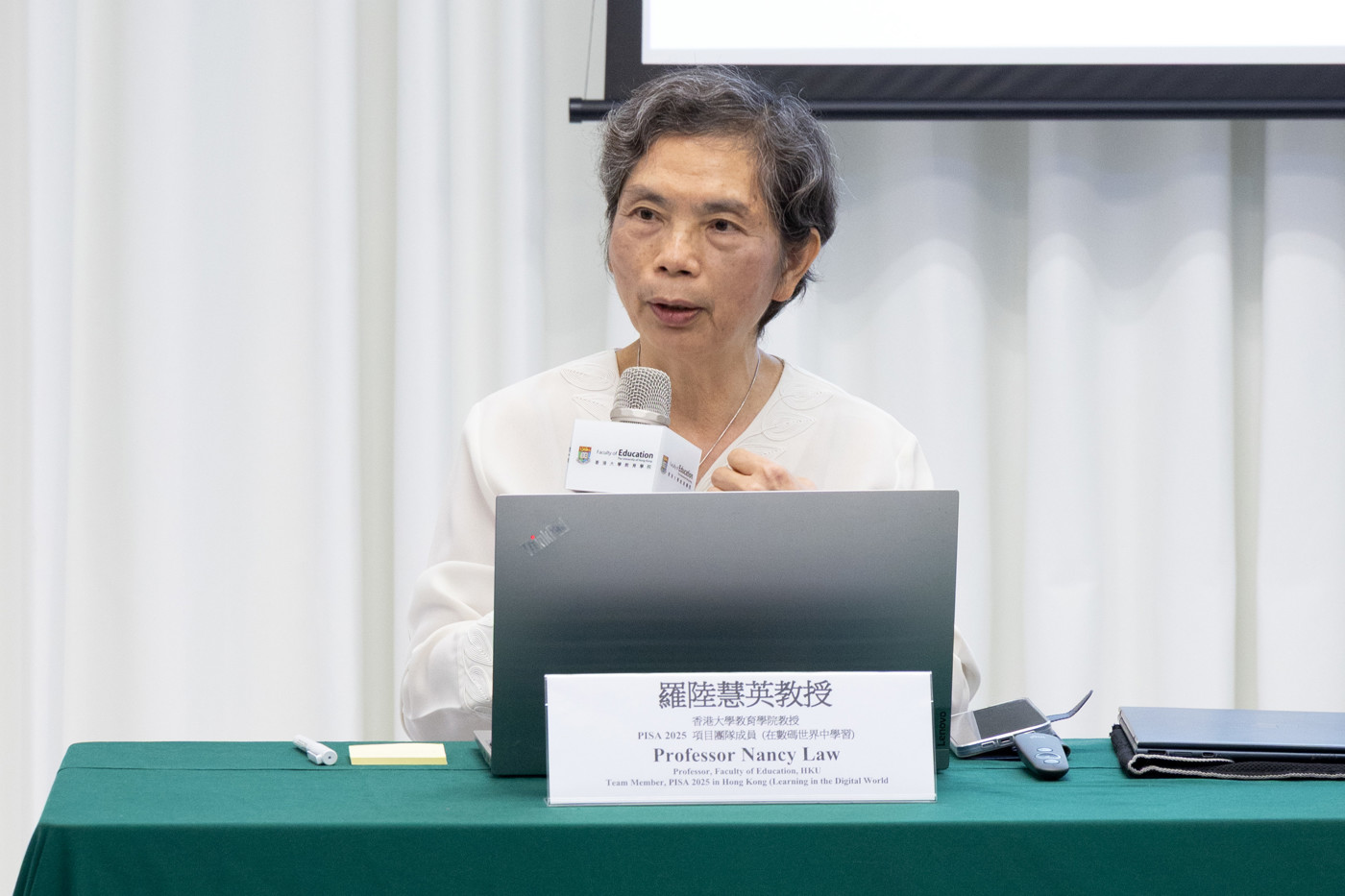
Evidence-based reasoning involves students’ ability to use evidence to solve unfamiliar problems, evaluate information, interpret data, test possible solutions and explain conclusions. Hong Kong students demonstrated a clear strength in computational problem-solving, which shares important features with science, mathematics and reading literacy. They also showed relatively strong understanding of knowledge and evidence in science, particularly among higher-performing students who checked sources and relied on scientific studies. However, some students appeared to use scientific information without consistently verifying sources. This points to the importance of strengthening information evaluation in digital and AI-rich environments.
14. Classrooms play an important role in developing student agency by providing well-designed learning opportunities. Students benefit when teachers ask them to think deeply, explain their reasoning, work with abstract ideas, test evidence and build knowledge with classmates, rather than only answer routine questions. Teachers and peers therefore remain as important sources of support, helping students take initiative, seek help, reflect and improve.
Underlying Strengths of Hong Kong Education Landscape
15. HKU’s analysis also identifies continuing strengths in Hong Kong’s education landscape.
Environmental agency and digital adaptability: A notable strength is students’ performance in environmental agency and digital adaptability. Hong Kong students scored 497 in environmental agency in the science domain, above the international average of 480, with nearly 80% reaching at least Level 2, the baseline proficiency level. Students also showed strong pro-environmental attitudes. Together with their strong computational problem-solving performance, this suggests a solid foundation for engaging with future environmental challenges and emerging technologies.
Committed teachers: Teacher support remains a strength. High percentages of students reported that their science teachers show genuine interest in their learning, at 81.2%, higher than international percentage of 68.8%. Similarly, 82.1% reported that their teachers provide extra help until students understand, higher than international average of 72.7%. This represents an improvement since 2015 and reflects stronger classroom support.
Educational equity: As in previous years, Hong Kong continues to demonstrate strengths in educational equity. Around 15% of disadvantaged students remain among the top performers, higher than the international average of 12%. This reflects the importance of targeted support and the system’s commitment to providing opportunities for learners from different backgrounds.
Building Future Readiness in the Age of AI
16. Moving forward, HKU’s analysis suggests broader opportunities to stretch more students towards advanced competencies. Hong Kong students’ strong performance in Learning in the Digital World indicates that many already have the potential to work with complex digital and computational problems, including modelling, logical reasoning, testing solutions and evaluating information. This strong foundation presents an opportunity to extend these strengths more fully to science, mathematics and reading, especially in tasks that require abstract reasoning, critical evidence evaluation, sophisticated modelling and clear explanation to complex issues.
17. The PISA assessment results can provide valuable insights for Hong Kong schools and teachers to further improve students’ future readiness. Schools may use the findings to review curriculum planning, identify strengths and areas for improvement, while teachers may translate the results into classroom practice by strengthening students’ problem-solving skills and engaging them in evidence-based reasoning. In this way, PISA assessment can be used as a learning opportunity to improve student agency, rather than being viewed solely as an endpoint. To support this work, HKU has already planned a series of seminars and workshops for educators on interpreting PISA findings and applying them to teaching, assessment design and school-based strategies.
18. In the age of AI, student agency is especially important. Students need to use digital and AI tools not to replace thinking, explanation or reasoning, but to ask better questions, check sources, compare evidence, improve explanations and reflect on their learning. The next step is to empower students to apply these competencies more widely across domains, including judging the credibility of information, using technology responsibly, understanding complex issues from multiple perspectives and taking informed action. These efforts will strengthen students’ future readiness in an AI-driven and sustainability-focused world, and align with international education developments, including the growing emphasis on AI-related literacy in the upcoming PISA 2029 cycle.
Footnotes
[1] PISA is an international large-scale education study coordinated by the Organisation for Economic Co-operation and Development (OECD). It examines 15-year-old students’ ability to apply knowledge and skills in real-life contexts. Each PISA cycle covers three core domains, reading, mathematics and science, while placing particular emphasis on one major domain. In PISA 2025, science was the major domain. Each cycle also includes an innovative domain. In 2025, this was Learning in the Digital World, which assessed students’ computational problem-solving skills. A total of 91 countries and economies participated in 2025, with more than 760,000 students taking part worldwide. Since 2020, PISA has been conducted every three years, and starting from 2025, the study cycle will move from a three-year to a four-year cycle.
[2] OECD is an international organisation of member countries that also works with partner economies. It addresses policy issues including education, economic development, employment, innovation and social well-being. The OECD coordinates PISA and reports international benchmarks, enabling participating countries/economies to compare students’ performance across domains and over time.
[3] In PISA, proficiency levels describe what students can typically do at different levels of performance. Level 1 represents the lowest proficiency level and Level 6 the highest. Levels 5 and 6 are commonly regarded as top-performing levels, students at Levels 2 to 4 are described as attaining baseline to medium proficiency, while performance below Level 2 is generally considered as low-performing.
Media Note:
For media enquiries, please contact:
Ms Kelly Shum
Executive Officer (Communications)
Faculty of Education, HKU
3917 8239 (Tel)
kellyks@hku.hk (Email)
For enquiries concerning PISA 2025, please contact:
Professor Frederick Leung
Emeritus Professor, Faculty of Education, HKU
Project Leader and National Project Manager of PISA 2025 in Hong Kong
3917 4248 (Tel)
frederickleung@hku.hk (Email)Professor Wai-ip Lam
Associate Professor, Faculty of Education, HKU
Co-Project Leader and Team Member of PISA 2025 in Hong Kong (Language and Reading)
3917 5282 (Tel)
jwilam@hku.hk (Email)Ms Connie Leung
Project Manager of PISA 2025 in Hong Kong
Faculty of Education, HKU
3917 6102 (Tel)
ccyleung@hku.hk (Email)
To review the e-version of the press release, and download photos, presentation file and further reference materials, please visit: https://web.edu.hku.hk/press/press-release-pisa2025.
Related Topics
Related News