

媒体中心
香港大學吞咽研究所發布
「促進在家安老政策:院舍及家中體弱長者之安全吞咽研究」研究結果
吞咽障礙是一種常見的長者問題。研究指出吞咽障礙可導致患者生活質素下降、營養不良、脱水,甚至死亡。現時香港没有有關長者吞咽障礙的統計數據。有見及此,香港大學教育學院言語及聽覺科學部吞咽研究所剛完成一項有關全港社區長者之安全吞咽調查。此研究主要探討兩大範疇:
- 為全港居於安老院舍或居於家中並接受社區照顧服務之長者進行有關吞咽障礙的數據統計;和
- 就安老院舍前線員工及須在家中照顧長者的家人對吞咽障礙的知識與餵食技巧進行評估。
此項研究由公共政策研究資助計劃資助,分三階段進行。首階段以電話調查方式統計全港長者患有吞咽障礙的普遍性;第二階段到訪院舍,調查吞咽障礙對受訪者的影響及他們對吞咽障礙相關服務的滿意程度;第三階段評估照顧者對吞咽障礙知識與餵食技巧的掌握。全港政府資助的安老院舍和社區支援服務單位均獲邀參與第一階段研究,當中有34間安老院舍和21間社區支援服務單位提供統計數據。在第二階段,研究人員到訪22間院舍和20間社區服務單位,受訪長者人數達878人,約百份之四十三的長者有吞咽障礙。第三階段有504位院舍前線員工及93名家人參與。
第一階段: 吞咽障礙的普遍性
近三成的安老院舍長者患有輕度吞咽障礙,另外三成則有中度至嚴重程度的吞咽障礙。社區支援服務單位方面,亦有近三成的長者患有輕度吞咽障礙,患有中度至嚴重程度的長者人數有約一成三。
第二階段: 吞咽障礙的影響及對吞咽障礙相關服務的滿意程度
相比非患有吞咽障礙的長者,患有吞咽障礙長者的生活質素較差。接近全部的安老院舍長者和百份之六十的社區支援服務單位長者反映於最近一年從來没有接受過任何吞咽評估或治療。約百份之七十之長者認為他們在進餐時有得到適當的協助。
第三階段: 照顧者對吞咽障礙的知識與餵食技巧之評估
總體而言,長者照顧者都有良好的食物準備和基本餵食的知識與技巧,如身體姿勢和餵食之份量與節奏。不過有百份之八十的照顧者並不了解一些長者是屬於吞咽障礙的高危人士,如曾患頭頸癌或有柏金遜的長者等。而大部份的照顧者亦不知道吞咽障礙可引致患者出現情緒問題,例如焦慮和抑鬱症等。
傳媒查詢,請聯絡香港大學教育學院高級經理(發展及傳訊)黃麗萍女士(電話:2219 4270/手機:9220 5840/電郵:qlpwong@hku.hk)瀏覽網上版新聞稿,請登入: https://web.edu.hku.hk/media.php,相關powerpoint 及圖片可在https://web.edu.hku.hk/press/20131203/ 下載。
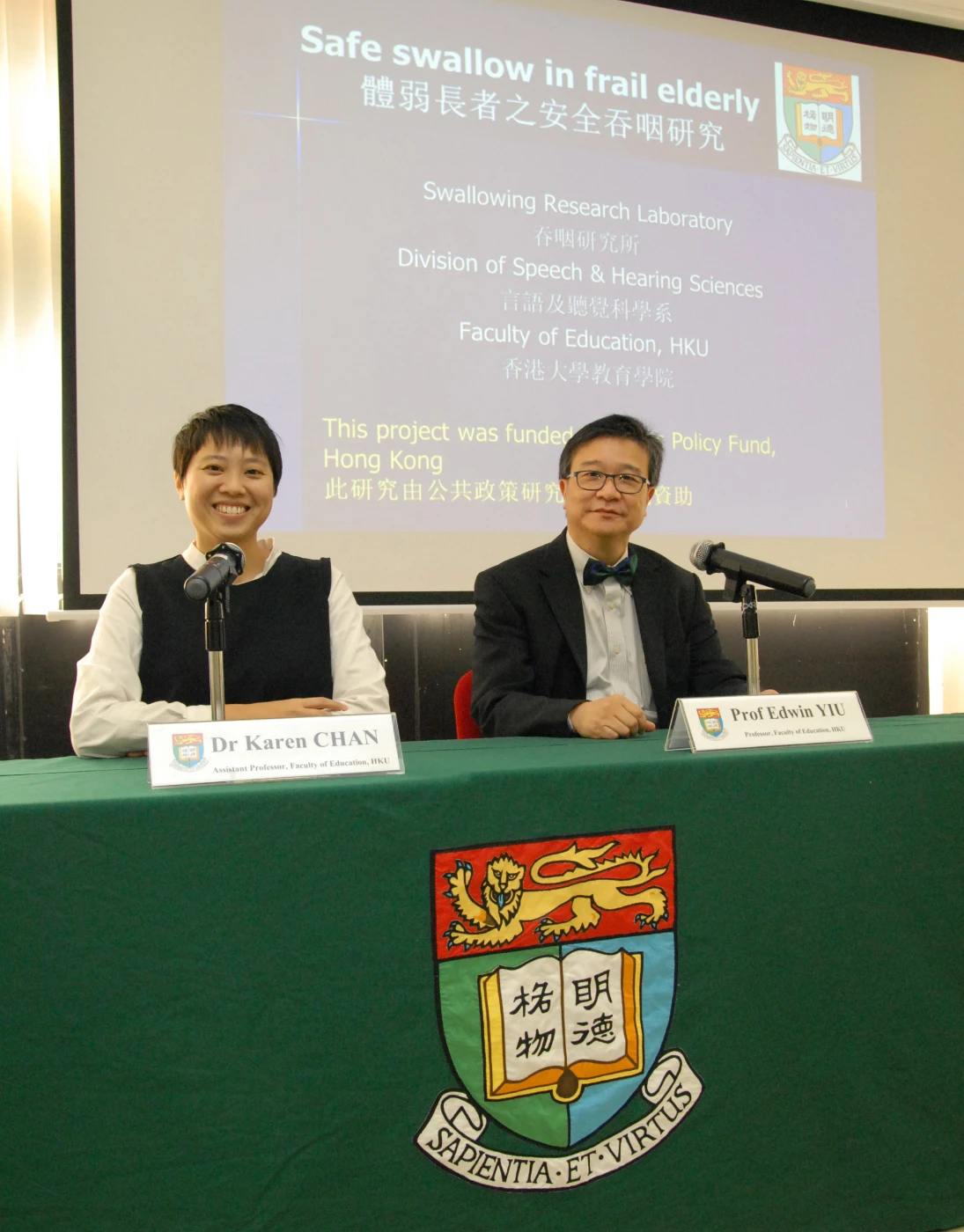
香港大學教育學院言語及聽覺科學部陳文琪博士(左)及姚文禮教授(右)。
The study was conducted in three phases: Phase I) to obtain statistical data on the prevalence of swallowing problems through phone interviews; Phase II) to evaluate the impact of swallowing problems and service satisfaction through face-to-face interviews; and Phase III) carers’ knowledge and skill assessment. In Phase I, all subsidized residential care service units and community support service units for the elderly in HK were invited to participate. A total of 34 residential units and 21 support units reported their number of elderly residents who had swallowing problems. In Phase II, research team members visited 22 residential units and 20 support units to conduct face-to-face interviews with the elderly. A total of 878 elderly people (around 43% had swallowing problems) participated in the second phase. Finally, in Phase III, 504 front line staff from the residential units and 93 family members who took care of the frail elderly at home participated in the study.
Phase I: Prevalence of swallowing problems
The results indicated that around 30% of the elderly residents had mild swallowing problems, another 30% had moderate to severe swallowing problems. On the other hand, around 30% of the community support service users had mild swallowing problems and around 13% had moderate to severe swallowing problems.
Phase II: Impact of swallowing problems and service satisfaction
Results showed that elderly people with swallowing problems had poorer quality of life than those who did not have swallowing problems. Almost all of the elderly in the residential units and 60% of those from the support units reported that they had not received any swallowing assessments and treatments in the last 12 months. Around 70% of the elderly felt that they had appropriate mealtime assistance.
Phase III: Carers swallowing management knowledge and skills
In general, the carers had good knowledge and skills in meal preparation and basic feeding (such as body posture and rate and volume of feeding). However, around 80% of them were not aware of some of the high risk groups for eating disorders, e.g. those with history of head and neck cancer and Parkinson’s disease. The majority of the carers were not aware that such eating disorders may bring about negative emotional consequences such as anxiety and depression.
For media enquiries, please contact Ms Queenie Wong, Senior Manager (Development and Communications), Faculty of Education (Tel.: 2219 4270 / Mobile: 9220 5840 / Email: qlpwong@hku.hk Please visit https://web.edu.hku.hk/media.php to view the e-version of the press release. The powerpoint and photos can be downloaded at https://web.edu.hku.hk/press/20131203/.
相关主题
相关文章