
媒体中心
全新激光技術改革恐龍研究
港大地球科學系研究︰激光誘導螢光技術揭示前所未見的化石細節
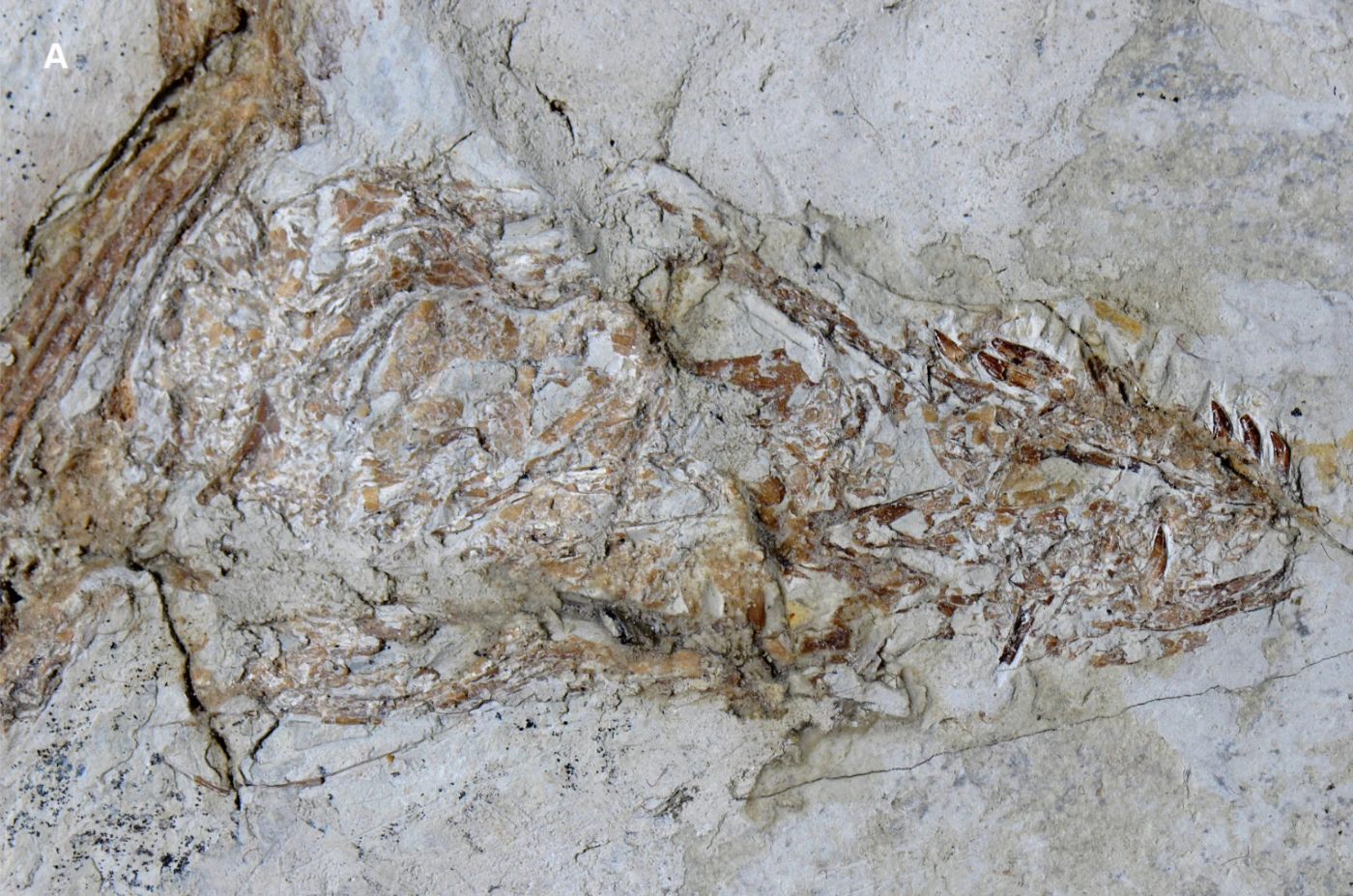
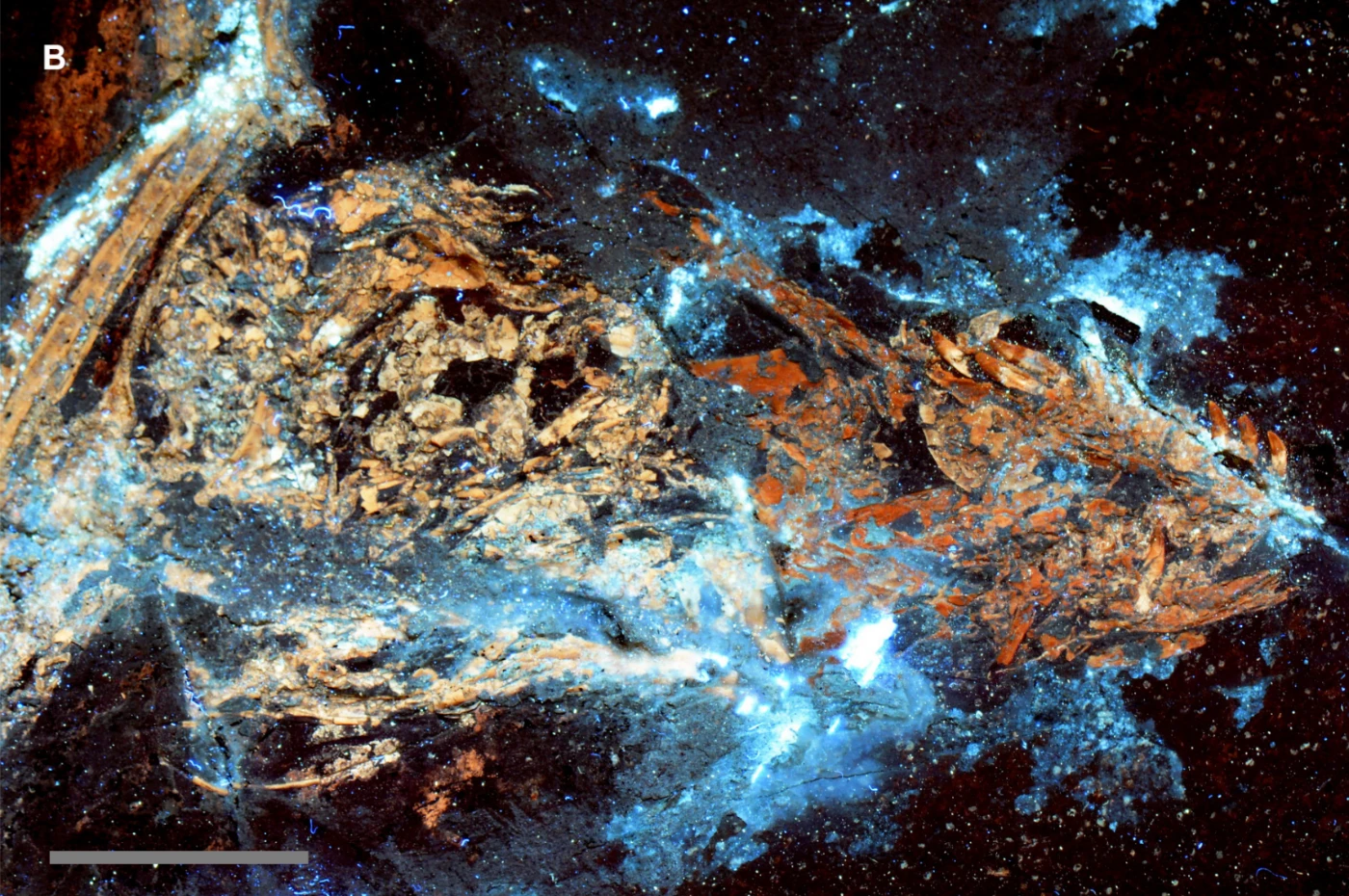
The skull from specimen IVPP V13320 of the gliding carnivorous dinosaur Microraptor: is it a composite? A, the skull of IVPP V13320 under white light conditions shows subtle colour differences in the bone across a break in the rock slab – darker bone proximally and lighter bone distally. B, Under laser light stimulation, the bone fluoresces with the same colour pattern observed under white light conditions (see A) indicating that the colour differences relate to differences in the fossil’s mineral composition. The latter indicates that the skull is a composite specimen, but it is also possible - but less likely - that the pattern observed reflects variability in the conditions under which the animal was deposited and eventually transformed into rock. Scale bar 1 cm.
香港大學地球科學系研究助理教授兼古脊椎研究所主管的文嘉棋博士以及八位來自世界各地的學者,研發了一種簡單的新技術來研究化石。這種新技術名為激光刺激螢光 (LSF: laser-stimulated fluorescence),它以激光取代一般的紫外光,使通常不會螢光的化石在受激光的刺激下發出螢光,再利用相機鏡頭拍攝螢光影像以進行分析。有關技術詳情刊登在科學期刊《PLOS ONE》。
美國西雅圖柏克博物館(Burke Museum)的古生物學研究助理兼是次研究的主要作者Thomas Kaye指︰「激光螢光打開了研究前所未見和未知的化石特徵的大門」。
每一種的激光顏色代表不同波長的光,而不同波長的光能使化石上的礦物有不同的刺激反應。LSF既能準確地分析微小的化石,亦可把激光投射在較大的標本進行研究。在《PLOS ONE》刊登的學術文章中,研究隊伍以五個研究例子展示新技術的應用。其中一項研究分析了於美國懷俄明州西部綠河組發現的羽毛化石。這些羽毛提供了研究在化石保存下來的軟組織的新突破。在普通燈光下,羽毛上的羽枝是顯而易見的,但卻無法觀察環環相扣的小羽枝。然而,利用LSF背光觀察該化石時,廣泛分佈在化石上微小的小羽枝即變得清晰可見。除了該化石外,多塊寸來自同期同時的化石亦顯示出相同的結果。在未有LSF技術之前,這些研究恐怕已假設那些羽毛缺乏小羽枝。
除了用於研究羽毛化石外,研究隊伍亦發現LSF技術能識別埋藏在岩石基質下的化石,從而自動化和加快把微化石從礫石中篩選出來,更可用於分析不能從發現地點掘出來的化石,甚至鑑定偽造或經人工方法合成的假化石。港大文嘉棋博士在論文中以他專注研究的小盜龍化石(一種能滑翔的肉食性恐龍)來闡釋合成化石的研究例子。
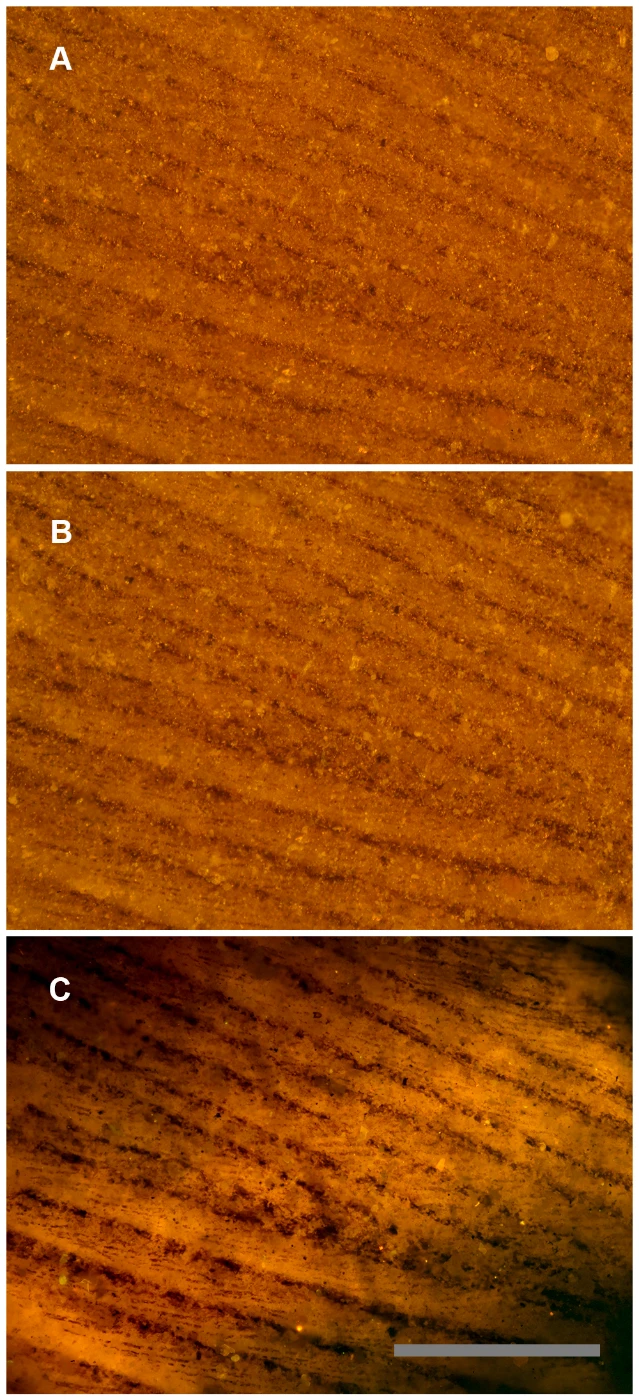
A ~50 million year old bird feather from the Green River Formation
在古生物研究中能使用的非破壞性研究方法十分少;LSF將加入清單成為其中一項新方法。LSF為化石中的骨、軟組織、體壁(如皮膚和植物表皮的保護層)和周圍岩石基質的指紋提供一種即時而非入侵性的化學識別。此方法更可代替昂貴的掃描方法,如X光和電腦掃描,以尋找隱藏在岩石基質內的化石。有了LSF,研究人員只需約港幣4000元便可迅速設立研究站。這意味著在未來可能只需用激光掃描一下恐龍化石,便可知道隱藏在化石內的豐富知識。
文嘉棋博士補充指︰「LSF將成為古生物研究中一個重要的主流技術,故我和研究隊伍希望此技術能發揮其功能,進一步推動古生物研究的發展」。
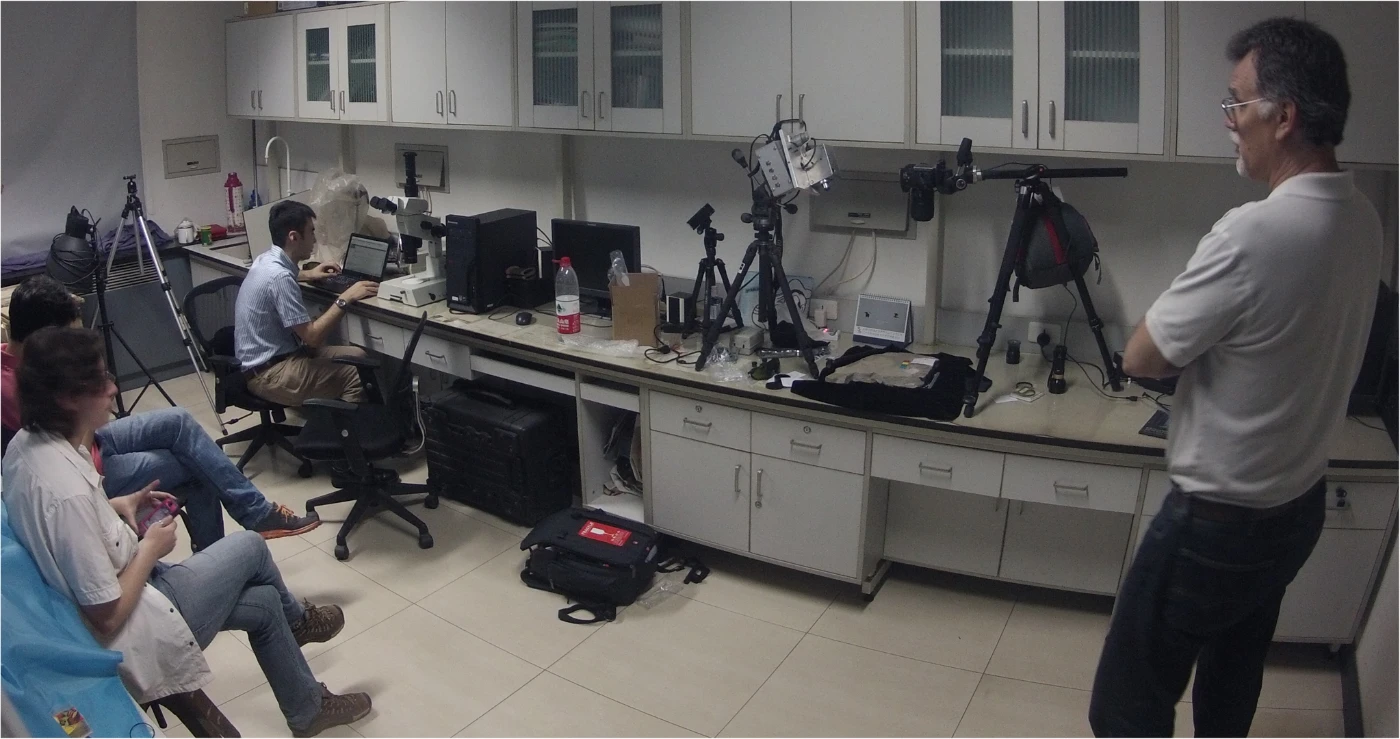
國際研究團隊於北京進行研究期間所攝。右起: 美國西雅圖柏克博物館Thomas Kaye (主作者)、香港大學地球科學系古脊椎研究所主管的文嘉棋博士 、美國西南俄克拉荷馬州立大學Amanda Falk博士。
Research team members on a data collection trip to Beijing, China. Right: Thomas Kaye (lead author; Burke Museum of Natural History and Culture, USA); middle: Dr. Michael Pittman (Vertebrate Palaeontology Laboratory, HKU); left: Dr. Amanda Falk (Southwestern Oklahoma State University, USA).
Dr. Michael Pittman (Vertebrate Palaeontology Laboratory, HKU) and Amanda Falk (Southwestern Oklahoma State University, USA) setting up a fossil specimen for the LSF technique.
相关主题
相关文章