
媒體中心
港大指出H7N9病毒已在中國家禽中出現地方性流行研究於國際頂尖學術期刊《自然》發表
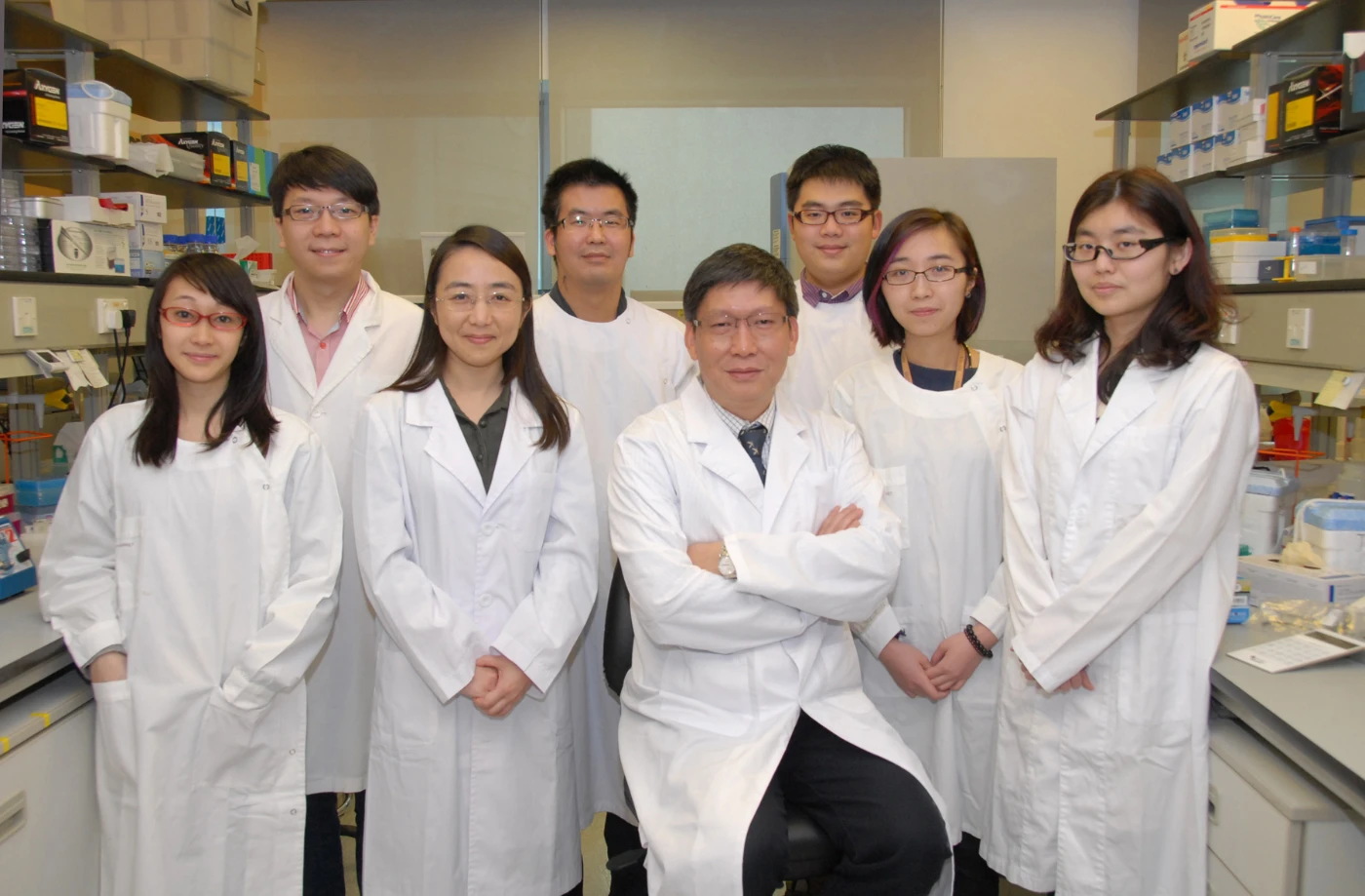
由香港大學李嘉誠醫學院(港大)公共衞生學院新發傳染性疾病國家重點實驗室管軼教授及朱華晨博士帶領的研究團隊,與深圳市第三人民醫院、汕頭大學醫學院、浙江省疾病控制與預防中心及美、澳科學家合作,發現甲型禽流感H7N9病毒的進化、傳播和流行規律,指出該病毒至少已經出現三種地方化流行譜系以及48種不同基因型的重組變種。研究同時在雞隻中發現一種新型H7N6禽流感病毒。這項重要研究結果將於3月12日凌晨於國際頂尖學術期刊《自然》(Nature)上向全球發表。
研究背景
自2013年以來,全球已經確診了638宗人類感染甲型禽流感H7N9病毒的個案,其中229人死亡(截至2015年3月10日)。廣東從2013年8月開始出現病例,同年入秋後患者明顯增多,截至今年2月已經成為累計報告患者最多的省份。為了了解病毒再次出現的途徑,以及未來可能的疫情發展及對公共健康的影響和威脅,港大和內地研究機構聯合監測了H7N9病毒在中國5個省15個城市中的演變和傳播規律。
主要發現
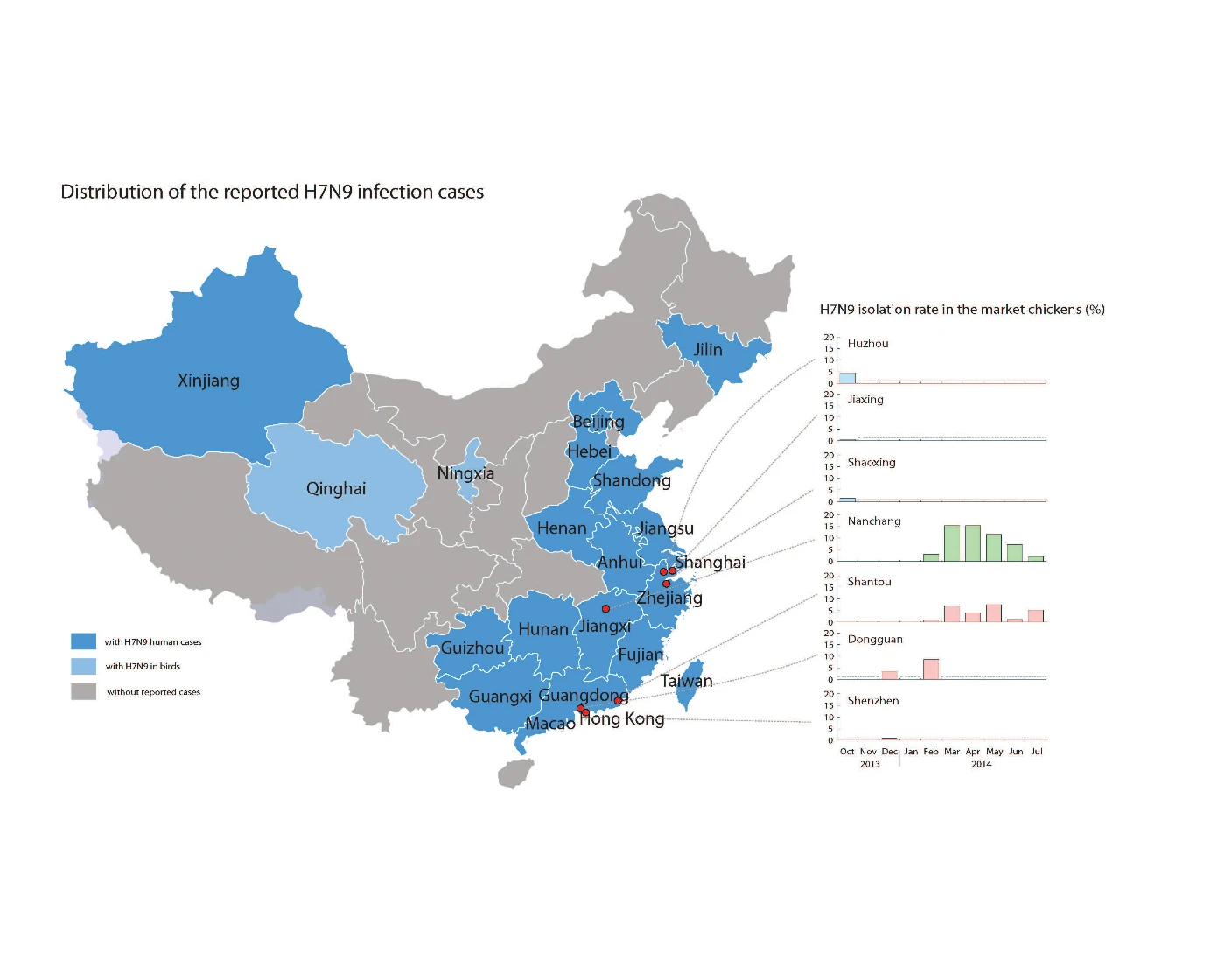
目前活禽市場的雞隻仍然是H7N9病毒感染人的直接源頭。病毒主要通過雞隻的呼吸道和口咽進行排毒。在H7N9第二輪爆發過程中,市場活雞H7N9的陽性率平均為3%,個別地區最高可以達到15%左右,而在江西市場活雞中亦出現了一種H7N6變種。
H7N9病毒在雞隻中持續流行並出現多樣化,並且已經通過家禽貿易和運輸線路擴散到了國內的多個地區。從目前H7N9的遺傳多樣性和地理分布的擴張情況上看來,如果不及時採取有效的控制措施,H7N9將在中國本土長期流行,並有可能傳播到周邊其他地區。
自2013年爆發以來,H7N9病毒在華東和華南地區逐步形成了三個明顯的地方化流行譜系,並和當地固有的H9N2病毒持續發生重組,產生了至少48種重組型變種。其中病毒的主要擴散方向是從華東地區進入廣東和其他省份。例如浙江病毒曾反覆多次被引入到江西、廣東等地。和第一輪病毒相比,第二輪病毒已經發生了較大的基因型變化,不過目前病毒抗原性還未出現大漂移,因此世衞於2013年選定的疫苗仍然是有效的。
研究啟示及建議
是次研究中,研究人員發現,市場上的H7N9病毒主要都是在活禽市場的雞隻中檢測到,而且病毒主要的繁殖和排毒部位都是在口咽和呼吸道,因此,市場的活雞仍然是導致人群感染的源頭。研究團隊認為變革家禽業的理念、改變禽鳥銷售模式、切斷活禽市場特別是活雞與人群的密切接觸,是阻斷病毒從禽傳到人的重要措施。而關閉活禽市場、採用集中飼養、中央屠宰模式,將是解決問題的根本方法。
H7N9病毒主要發源於華東地區,在過去兩年間,已經從華東擴散到了周邊的許多省份和地區,可見加強對家禽尤其是雞群的監控力度和流行病學調查,對發現陽性的雞群進行徹底撲殺,嚴防可疑陽性動物的跨地區運輸,才是從源頭上切斷病毒傳播鏈的關鍵措施。
研究方法
H7N9病毒第二輪爆發之後,研究人員在內地五個省份15個城市進行流感調查,收集來自雞、鴨的口咽及消化道標本;同時與當地醫院和疾病控制與預防中心開展合作,收集臨床嚴重肺炎患者的呼吸道標本。他們將分離到的H7N9病毒進行全基因組測序,並通過數據分析確認了H7N9病毒的流行、傳播和變異規律,以及病毒各個基因的來源。在目前全世界已經公布的709個H7N9病毒基因組序列中,有64.5%是由該研究提供的。
有關研究團隊
研究由香港大學李嘉誠醫學院公共衞生學院教授、於崇光基金教授(病毒學)管軼教授及助理教授朱華晨博士領導。研究團隊亦包括來自港大新發傳染性疾病國家重點實驗室、深圳市第三人民醫院、汕頭大學醫學院、浙江省疾病控制與預防中心、美國聖裘德兒童研究醫院、悉尼大學等多位研究人員。此團隊將繼續為科學研究作出貢獻,以對抗新發傳染性疾病。
如欲瀏覽新聞圖片,請登入以下網址:
https://www.med.hku.hk/v1/news-and-events/press-release
Professor Yi Guan (Middle in the front row), Daniel C K Yu Professor in Virology and Professor in the School of Public Health, Li Ka Shing Faculty of Medicine, HKU and his team find that the H7N9 viruses have diverged into three geographically distinct clades, with at least 48 different reassortant genotypes.
An international research team, led by Professor Yi Guan and Dr Huachen Zhu of the State Key Laboratory of Emerging Infectious Diseases and School of Public Health, Li Ka Shing Faculty of Medicine, The University of Hong Kong (HKU), in collaboration with Shenzhen Third People’s Hospital, Shantou University Medical College and Zhejiang Provincial Center for Disease Control and Prevention, and scientists from America and Australia revealed the dissemination, divergence and establishment of the avian influenza A (H7N9) virus causing ongoing outbreaks in China. The researchers find that the H7N9 viruses have diverged into three geographically distinct clades, with at least 48 different reassortant genotypes. They also identify a previously unrecognised H7N6 avian virus in chickens. This important research will be published tomorrow (March 12) in early hours in the most prestigious international scientific journal, Nature.
About H7N9 human infections
To date, a total of 638 laboratory-confirmed cases of human infection with avian influenza A (H7N9) virus have been reported globally since 2013, with 229 deaths recorded as of March 10, 2015. Human cases were not reported in Guangdong until August 2013, and the autumn of that year saw a dramatic increase of human infections. Guangdong has now become the province with the most H7N9 patients. To understand more about how the virus re-emerged, how it might develop and threaten public health, researchers from HKU and mainland Chinese institutions jointly monitored the evolution and spread of H7N9 over 15 cities across 5 provinces in China.
Key research findings
This study shows that chickens at live-poultry markets are the direct source of H7N9 human infections. The virus was predominantly shed from the respiratory and oropharyngeal tracts of these birds. At the time of the second H7N9 outbreak wave, the H7N9 isolation rate in the marketed chickens was 3% on average, yet in some cities it reached over 15%. In Jiangxi, there was a previously unrecognised, but related, H7N6 variant also emerging in chickens in the live poultry markets.
The H7N9 virus has persisted and diversified in chickens and spread across China, most likely due to poultry movement along trade routes. The expansion of its genetic diversity and geographical spread indicates that, unless effective control measures are in place, the H7N9 virus is likely to persist and spread beyond the region.
The H7N9 viruses, since their emergence in early 2013, have diverged into three geographically distinct clades that became established in East and South China. Sequential reassortments with the locally enzootic H9N2 viruses have led to the generation of at least 48 reassortant genotypes. Multiple introductions of the viruses from East China, e.g. Zhejiang, to Guangdong and the other provinces (e.g. Jiangxi) were observed. In the second wave, none of the H7N9 viruses inherited all internal genes from the Wave 1 viruses, indicating marked changes in the genotypes. Fortunately, overt antigenic changes have not been identified in the Wave 2 viruses, thus the candidate vaccine strains recommended by the WHO in 2013 will still be effective.
Research implications and suggestions
The avian H7N9 influenza viruses were predominantly isolated from market chickens which majorly replicated in the oropharyngeal and respiratory tracts of the birds, suggesting that the presence of H7N9 at live poultry markets has fuelled the recurrence of human infections. The researchers suggest that a change in the poultry trading and marketing systems to prevent direct contact of human populations with live poultry, especially chickens, will be key to averting avian-to-human transmission of viruses. Closure of live poultry markets, central husbandry and central slaughtering are the ultimate solutions to this problem.
The H7N9 influenza viruses originated in East China, disseminated across the country, and caused outbreaks in many provinces over the past two years. Effective surveillance and control measures should be reinforced on poultry especially on domestic chicken populations. Culling of birds at the infected regions and prohibition of the inter-regional poultry transportation during disease outbreaks, are the keys to break the transmission chain and to reduce the threat of H7N9 to public health.
Research method
Following the second H7N9 outbreak wave, the researchers collected samples from the oropharynx and respiratory tracts of chickens and ducks over 15 cities across 5 provinces in China. In collaboration with local hospitals and Centres for Disease Control and Prevention, the HKU researchers also collected clinical samples from patients with severe pneumonia. They isolated many influenza viruses and genetically sequenced those of the H7N9 subtype and other related viruses. Advanced phylogenetic methods were used to reconstruct how the H7N9 virus evolved, disseminated and diverged into persistent clades and to determine the origin of the genes. Of all the 709 publicly available H7N9 virus genomic sequences, 64.5% of these were contributed by this study.
About the HKU research team
This research was led by Professor Yi Guan, Daniel C K Yu Professor in Virology and Professor and Dr Huachen Zhu, Assistant Professor in the School of Public Health, Li Ka Shing Faculty of Medicine, HKU with contributions from a group of researchers from the HKU State Key Laboratory of Emerging Infectious Diseases, Shenzhen Third People’s Hospital, Shantou University Medical college, Zhejiang Provincial Center for Disease Control and Prevention, St Jude Children’s Research Hospital (USA) and Sydney University (Australia). The HKU influenza research team continues to make contributions to combat emerging infectious diseases.
Please visit the website at https://www.med.hku.hk/v1/news-and-events/press-releases for press photos.


相關主題
相關文章