
Student Life
Before HKU: An Incoming Student Tries to Ask the Right Questions
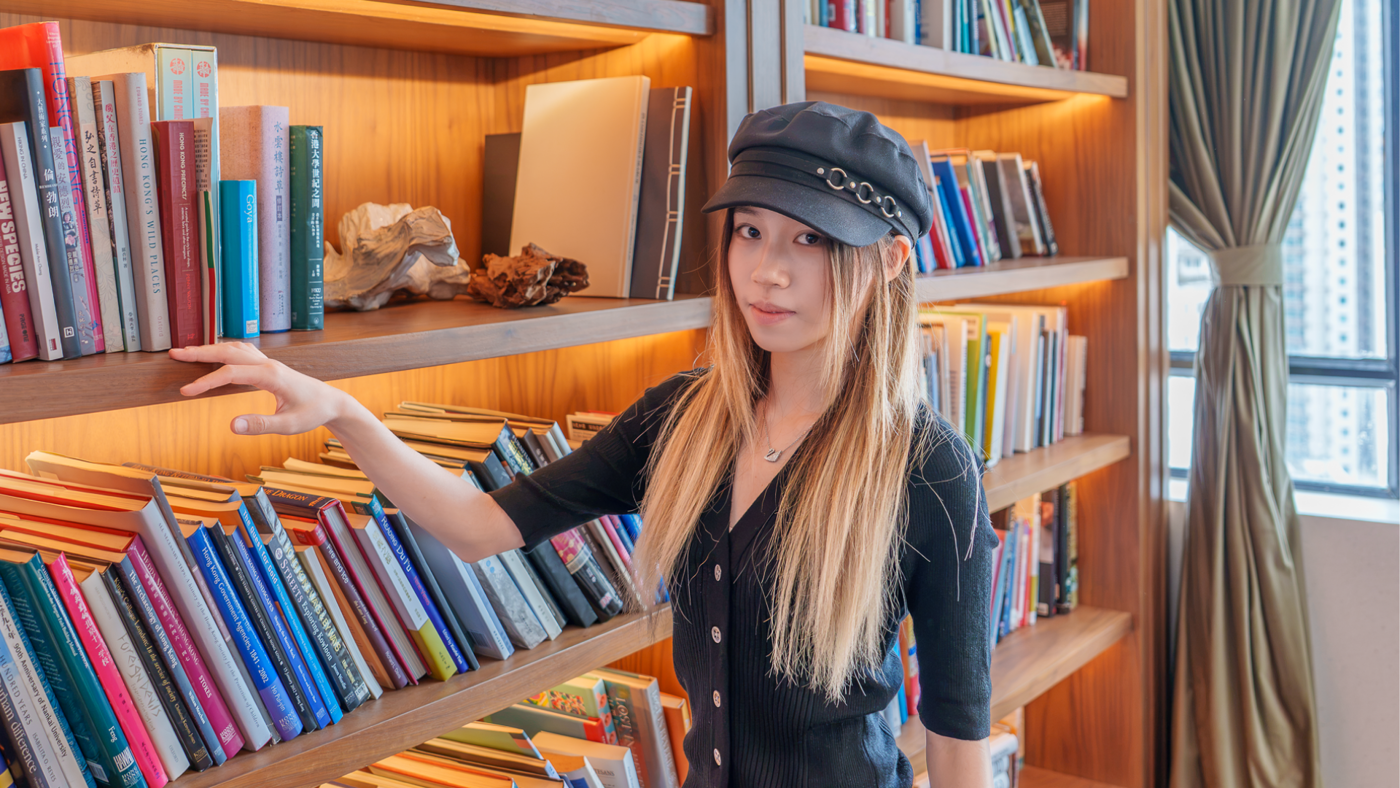
Editor’s note: Nina Li is a first-year student at HKU’s School of Innovation. This first-person essay reflects the author’s personal views and experiences.
This summer, I have been trying to answer a deceptively simple question: Where do I want to stand in a world of accelerating technological change?
The question has been with me for as long as I can remember. As a child, I found myself drawn to questions without easy answers: What is consciousness? Is reality only what we perceive, or does it exist independently of us? And if we have one body and a finite life, how fully can we experience and understand the world?
Over time, those questions led me from philosophy to consciousness studies, cognitive neuroscience, psychology, behavioral science, and rehabilitation. Science fiction gave them another form. I was fascinated by imagined worlds in which people could move beyond the limits imposed by the body and the physical environment — worlds that once felt remote but now seem less so.
Artificial intelligence, brain-computer interfaces, advanced computing, and extended reality are all changing the ways people process information, interact with machines, and imagine human capability. I do not think technology offers simple answers to the questions that first interested me. But it has made the questions feel more immediate.
Maybe that is why I’ve gravitated toward brain-computer interfaces, or BCIs. Through visits to university laboratories and time spent at a BCI company, I began to see how signals produced by the brain could be captured, decoded, and applied to real needs.
Even within BCI, there are many paths — different purposes, materials, methods, and research questions. Beyond it are AI, robotics, semiconductors, life sciences, and extended reality (XR). Each field opens a different window onto what may come next. Yet no individual can pursue every possibility. The more paths I could see, the harder it became to choose one.
So I began asking a different question: How should we learn when the future itself keeps changing?
For me, learning cannot mean only accumulating knowledge and hoping that one day it will become useful. It should begin with the problems worth solving and the kind of future we want to help create. From there, we can work backward: What do I need to understand? What skills do I need to build? Whom do I need to learn with?
I decided not to rush toward an answer. Instead, I stepped back. I traveled alone through forests, mountains, grasslands, and wetlands, putting distance between myself and schedules, achievements, and the constant pressure to optimize. On long stretches of road, I heard the wind, birds, animals, the ground beneath my feet, and my own breathing.
The time outside made the scale of the world feel larger than any one person’s ambition. We can devote a lifetime to one direction and still touch only a small part of what there is to know. But being small does not make individual action meaningless. It makes the choice of where to place our attention, time, and energy more important.
When I returned, I looked again at the questions that had first drawn me toward BCI and neuroscience. This time, I tried to see beyond any single technology. I became more interested in the wider ecosystem: researchers and laboratories, companies and investors, and the people who translate an idea from a question into work that can reach the world.
I began asking not only whether a technology could work, but how it travels. How does research become technology? How does technology become a product? How do people, institutions, and resources come together at the right moment?
Technology alone does not determine the future. People do: the people who ask difficult questions, connect different fields, test ideas responsibly, and do the patient work of turning imagination into reality.
This summer did not give me final answers. But it did give me better questions. Where can I contribute? What is worth building? What else do I need to learn? And what kind of future do I want to help make possible?
I will bring those questions with me to HKU. I hope university will allow me to remain unfinished—to move across disciplines, connect ideas and people, and learn how to turn an early curiosity into work that reaches beyond myself and into the real world.
The next chapter begins at HKU.
Related Topics
Related News